Car Detailing & Wash
【Wheel Killer】Brake Dust Isn't Just Dirt, It 'Bites' Into Your Wheels? A Full Analysis of Wheel Iron Contamination and the Ultimate Cleaning Guide
Part of the PPF BY CAR topic hub

Coating adds gloss, but only film physically blocks stone chips. car wrapping Hong Kong — The guide contrasts coating vs film on scratch resistance, lifespan and cost.
Many Hong Kong car owners, when performing car detailing or routine car washes, focus most of their attention on the car's paintwork, aiming to keep it looking pristine. However, the most easily overlooked and quickest-to-get-dirty area is often the car's wheels, which are closest to the ground.
Have you noticed that no matter how diligently you wash your car, after just a few days of driving, the front two wheels quickly become covered in a layer of grey-black powder? This substance, known as 'brake dust' or 'wheel dust,' is actually a highly destructive 'wheel killer.' Not only does it affect the car's appearance, but if left untreated for too long, it will severely 'bite' into your beautiful wheels, causing permanent damage.
1. What Exactly is 'Brake Dust'? Why is it Completely Different from Ordinary Dust?
What we commonly refer to as 'brake dust' is scientifically known as brake dust. When you press the brake pedal, the brake calipers clamp down on the brake discs, using immense friction between the brake pads and discs to stop the car. During this extremely intense physical friction process, two critical elements are generated: extremely high temperatures and metallic particles.
Brake dust primarily consists of iron particles produced from the wear of brake pads and cast iron brake discs, mixed with carbon fibers, adhesive resins, and road grime. Because these iron particles are abraded at extremely high temperatures, when they scatter and come into contact with the surface of aluminum alloy wheels, they instantly 'semi-weld' or even embed directly into the wheel's clear coat. This is the fundamental reason why brake dust is ten thousand times harder to clean than ordinary dirt!
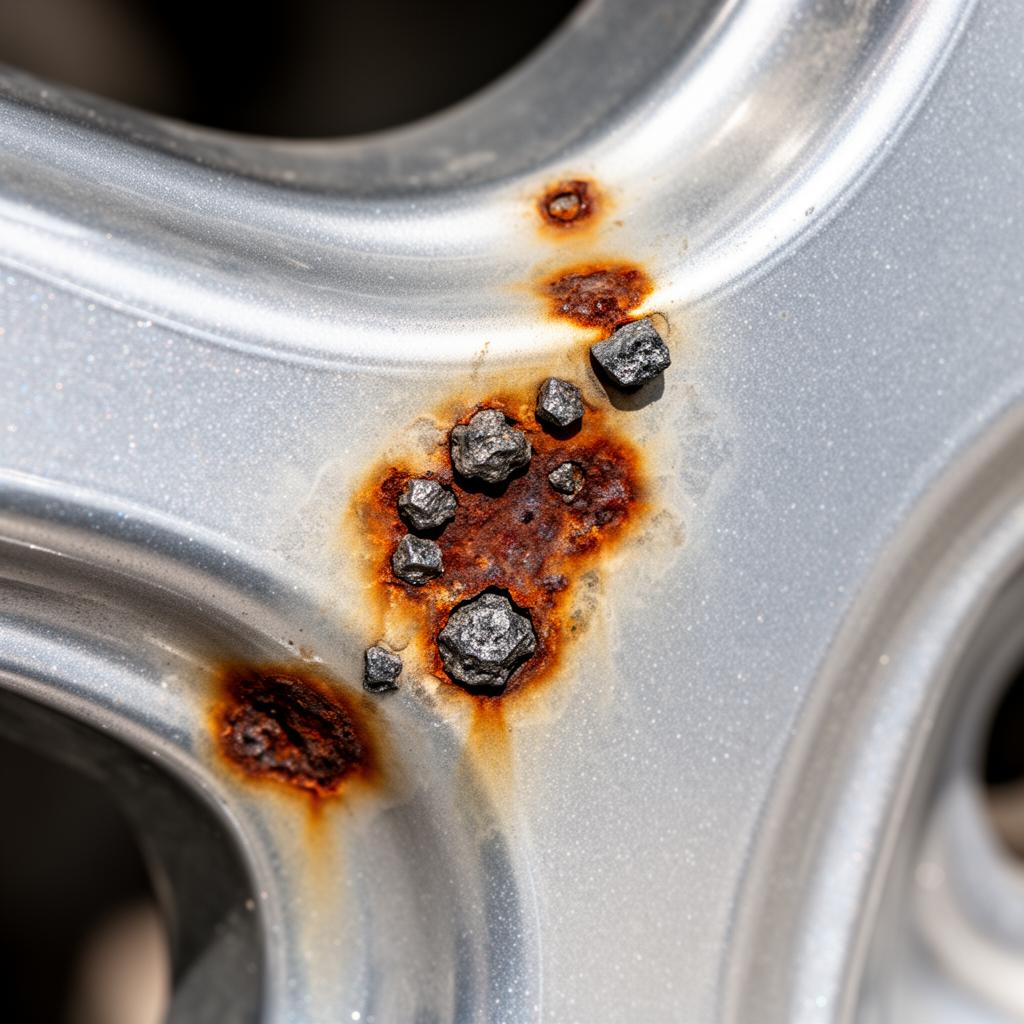
2. Deadly Threat: Why Does Brake Dust 'Bite' Into Your Wheels?
●Rusting iron particles expand, breaking through the protective layer.
Once high-temperature iron particles embed into the wheel coating, they react with oxygen in the air (rusting) when exposed to Hong Kong's humid weather, rain, or residual water from car washes. The expansion of rust creates microscopic forces that gradually break through the outermost protective clear coat of the wheel.
●The dual assault of acid rain and chemical corrosion.
Road puddles and rainwater are typically slightly acidic. When acidic water comes into contact with already rusted iron particles, it accelerates corrosion. Over time, the wheel surface will be covered with microscopic pits that may not be visible to the naked eye.
●Irreversible, permanent damage.
When corrosion penetrates the clear coat and reaches the underlying aluminum alloy, it triggers more severe aluminum oxidation, leading to indelible yellow rust stains, deep black pits, or even peeling. Once this stage is reached, the only option is an expensive 'wheel refurbishment' at a workshop.
3. Professional Car Wash Tutorial: The Correct Wheel Cleaning and Iron Removal Steps to Save Your Wheels
To tackle stubborn brake dust and iron contaminants, ordinary car wash soap is completely ineffective. Targeted chemical decomposition combined with physical cleaning is essential. Below is the professional car detailing standard operating procedure (SOP) for wheel cleaning:
| Step | Action | Key Requirement |
|---|---|---|
| Step 1 | Cool down wheels | Park in shade for at least 30 minutes before washing |
| Step 2 | Apply iron remover | Spray solution on dry wheel and wait 2-3 minutes for bleeding reaction |
| Step 3 | Physical cleaning | Brush deep inside barrel, behind calipers, and scrub wheel face |
| Step 4 | High-pressure rinse | Rinse thoroughly from top to bottom so no residue remains |
●Step One: Ensure wheels are completely cool.
Immediately after driving, the brake system and wheels are extremely hot. Spraying cold water or chemicals directly can deform or even crack brake discs, and cause the chemicals to dry instantly, leaving permanent chemical stains. Before washing, park in a shaded area for at least 30 minutes and ensure the wheels are cool to the touch before starting.
●Step Two: Use a dedicated iron remover.
Spray the solution evenly onto the dry wheel and caliper surfaces. A high-quality iron remover converts oxidized iron into water-soluble complexes. After 2-3 minutes, a large amount of purple-red liquid (commonly known as the 'bleeding' reaction) will flow out, indicating that the solution is dissolving the iron particles embedded in the wheels.
●Step Three: Perform physical cleaning with detailed brushes.
Before the solution dries, use a wool wheel brush to clean deep inside the barrel and behind the calipers. Use a detail hog hair brush for lug nut holes, valve stem edges, and spoke junctions. Then, gently scrub the wheel face with a wheel sponge.
●Step Four: Rinse thoroughly with a high-pressure washer.
From top to bottom, and inside out, thoroughly rinse away all cleaning agents, purple solution, and dirt, ensuring no chemical residue remains in the lug nut holes and caliper crevices.
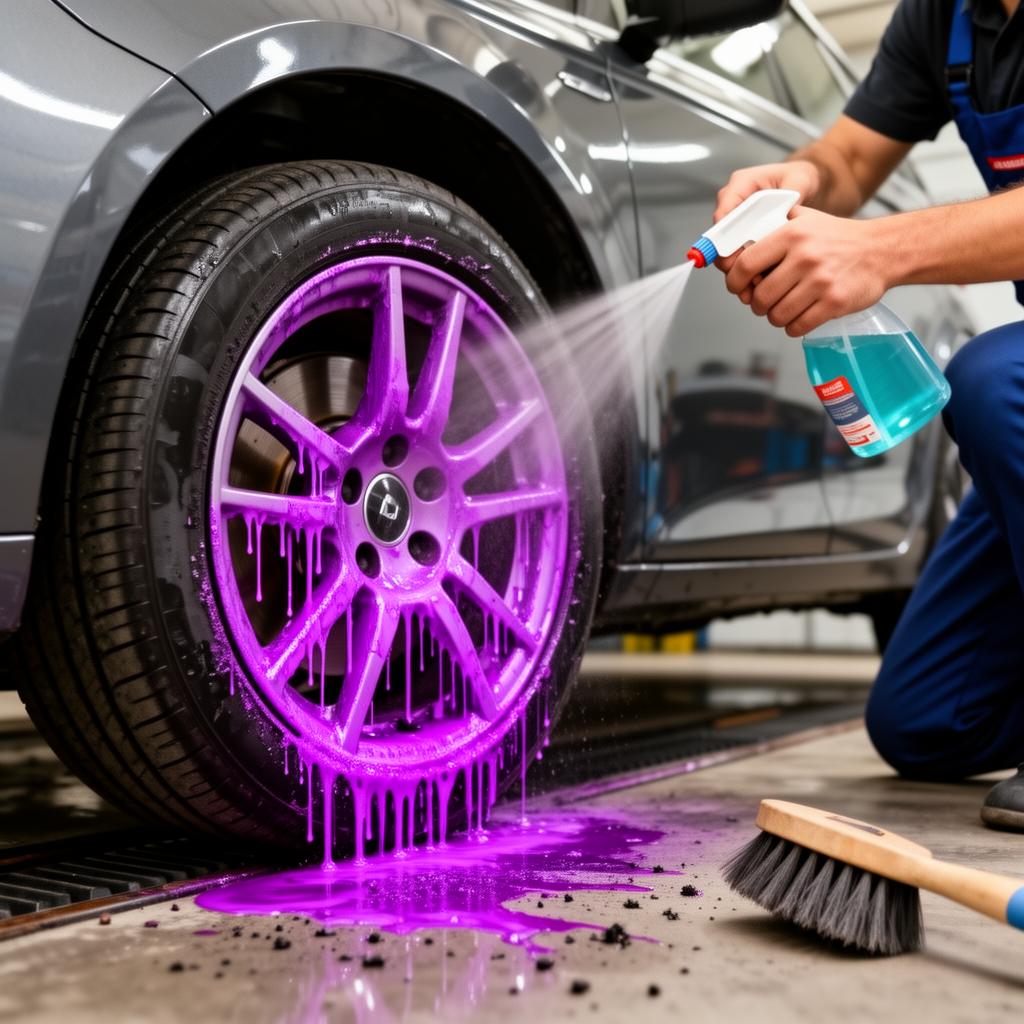
4. Prevention is Better Than Cure: The Ultimate Solution for Long-Term Protection of Aluminum Alloy Wheels
●Apply a dedicated ceramic coating to the wheels.
After deep cleaning and iron removal, applying a high-temperature nano ceramic coating to the wheels creates an extremely hard, high-temperature resistant (up to several hundred degrees) crystalline protective layer. It offers excellent hydrophobic and anti-fouling properties, preventing high-temperature brake dust from easily embedding. In the future, a high-pressure wash will typically be sufficient to clean the wheels.
●Upgrade to ceramic brake pads.
Ceramic brake pads produce very little dust during friction. The dust is light grey or even transparent and does not have high-temperature corrosive properties, making them an excellent investment for keeping wheels clean long-term.
●Develop a good habit of regular maintenance
Even if your wheels are coated or have ceramic pads, regular wheel cleaning should be a standard procedure during every car wash. Additionally, use an iron remover for deep cleaning every 1-2 months.
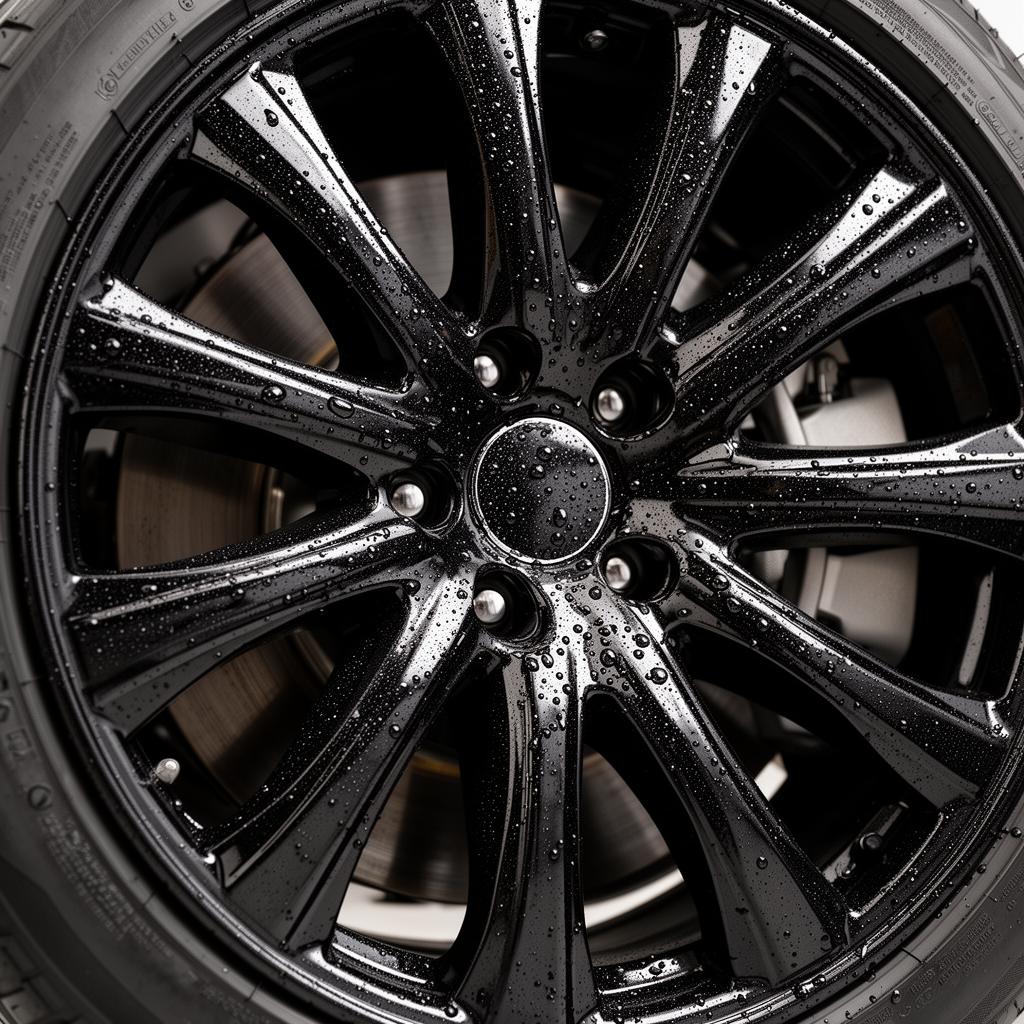
Wheel Deep Cleaning and Care Checklist
●Ensure Wheels Are Cool
Before cleaning, park the car in a shaded area and allow the wheels and brake system to cool until they are not hot to the touch. Applying cold water or chemicals to hot wheels can cause damage.
●Apply Iron Remover
Evenly spray a dedicated iron remover onto the dry wheels and brake calipers, and wait for the agent to chemically react with and dissolve the iron particles.
●Brush with Detailing Tools
Before the solution dries, use suitable tools such as wool brushes, detailing brushes, and sponges to thoroughly clean the inner and outer parts of the wheel, lug nut holes, and crevices.
●Rinse Thoroughly with High Pressure
Using a high-pressure washer, rinse away all cleaning agents, dirt, and chemical residues completely, working from top to bottom and inside out to ensure nothing remains.
●Apply a Protective Coating
After a deep clean, a special high-temperature ceramic coating can be applied to the wheels to form a dirt-repellent and heat-resistant protective layer, making future cleaning easier.
●Establish a Regular Maintenance Routine
Incorporate wheel cleaning into your regular car wash routine, and periodically use an iron remover for deep maintenance to keep the wheels in optimal condition.
Conclusion: A Perfect Car Appearance Starts with Clean Wheels!
There's a saying in the car detailing world: "How clean a car is, the first thing you look at is its shoes (wheels)." By understanding the destructive power of 'brake dust,' mastering the correct wheel cleaning and iron removal techniques, and combining them with appropriate car care protection measures, you can easily keep your beloved car in perfect condition at all times, completely free from the threat of wheel killers!
Related reading: PPF services overview · PPF maintenance SOP
Looking for a car wash in Kwun Tong? See LETS GET WASH: 24-hour self-service car wash in Kwun Tong.
Authoritative sources: XPEL official PPF product page
Ready for a professional PPF install?
Book LETS GET WRAP today
Our GSWF Tier-1 certified team will spec the right protection package for your car.
Get in touch


