PPF Knowledge
【Avoid the Pitfalls】 How to Choose Quality PPF? Unveiling TPU and TPH Materials – A Guide to Protecting Your Paint!
Part of the COATING vs PPF vs WRAP topic hub

New to car film? car wrapping Hong Kong — The full guide covers film types, pricing, choosing a studio and local regulations.
Applying PPF (Paint Protection Film) is definitely a major investment in the car detailing industry, with a full car application easily starting from over ten thousand dollars. However, when many car owners compare prices, they find some garages or online platforms advertising "full car PPF for only a few thousand dollars." Why such a huge price difference? The devil is in the details — the material of the PPF.
If you opt for a cheap, inferior protective film, not only will it fail to provide protection, but after a year or two, when you try to remove it, residual adhesive and yellowing will directly "destroy" your car's original factory paint. The cost of a full repaint could easily exceed the price of a high-quality film!
1. PVC (Polyvinyl Chloride): A Cheap Poison That Should Have Been Phased Out Long Ago
PVC is actually the rigid plastic pipe material commonly seen in our daily lives, and its application in car detailing represents the earliest, most primitive product.
●Material Characteristics
Extremely lacking in elasticity, very rigid. Technicians must use a high-temperature heat gun to forcibly stretch it during installation.
●Fatal Flaws
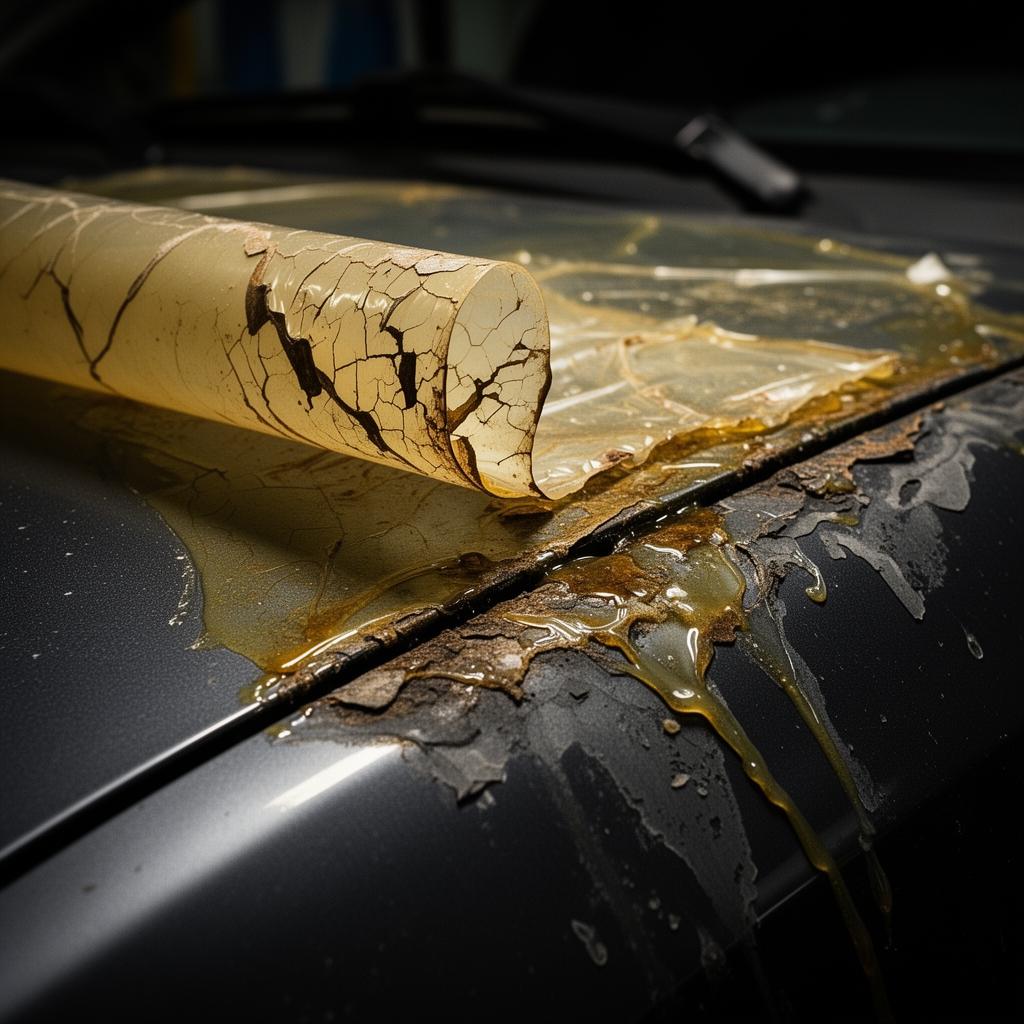
Completely lacks 'self-healing' capabilities. PVC has extremely poor UV resistance; it typically yellows severely (turning yellow or even brown) and cracks within six months to a year. Most alarmingly, PVC has very low chemical stability. Prolonged sun exposure can cause the adhesive to react chemically with the car paint, leaving behind difficult-to-remove residue when the film is peeled off, and can even strip the car paint entirely.
●Current Status
Completely phased out by professional car detailing shops, but still prevalent in the market for extremely low-priced, low-quality films sold online. Do not buy if you see it!
2. TPH: A Transitional "Fake TPU" That Misleads
TPH is a grey area term that has appeared on the market in recent years. Many unscrupulous businesses use TPH to impersonate high-grade TPU and deceive consumers.
●Material Truth
What is referred to as TPH is, at its core, still PVC. Manufacturers simply add 'plasticizers' to PVC to make the inherently rigid PVC soft, mimicking the feel of TPU.
●Common Pitfall
Although TPH may look and feel decent immediately after application, and even exhibit a temporary illusion of self-healing, its essence remains PVC. Plasticizers will volatilize over time and with heat. After approximately one year, the film will revert to its original state, becoming hard, brittle, and yellow, with severe adhesive residue issues persisting. This material is the most common trap that causes people to waste money!
3. TPU (Thermoplastic Polyurethane): The Gold Standard in Today's Car Detailing Industry
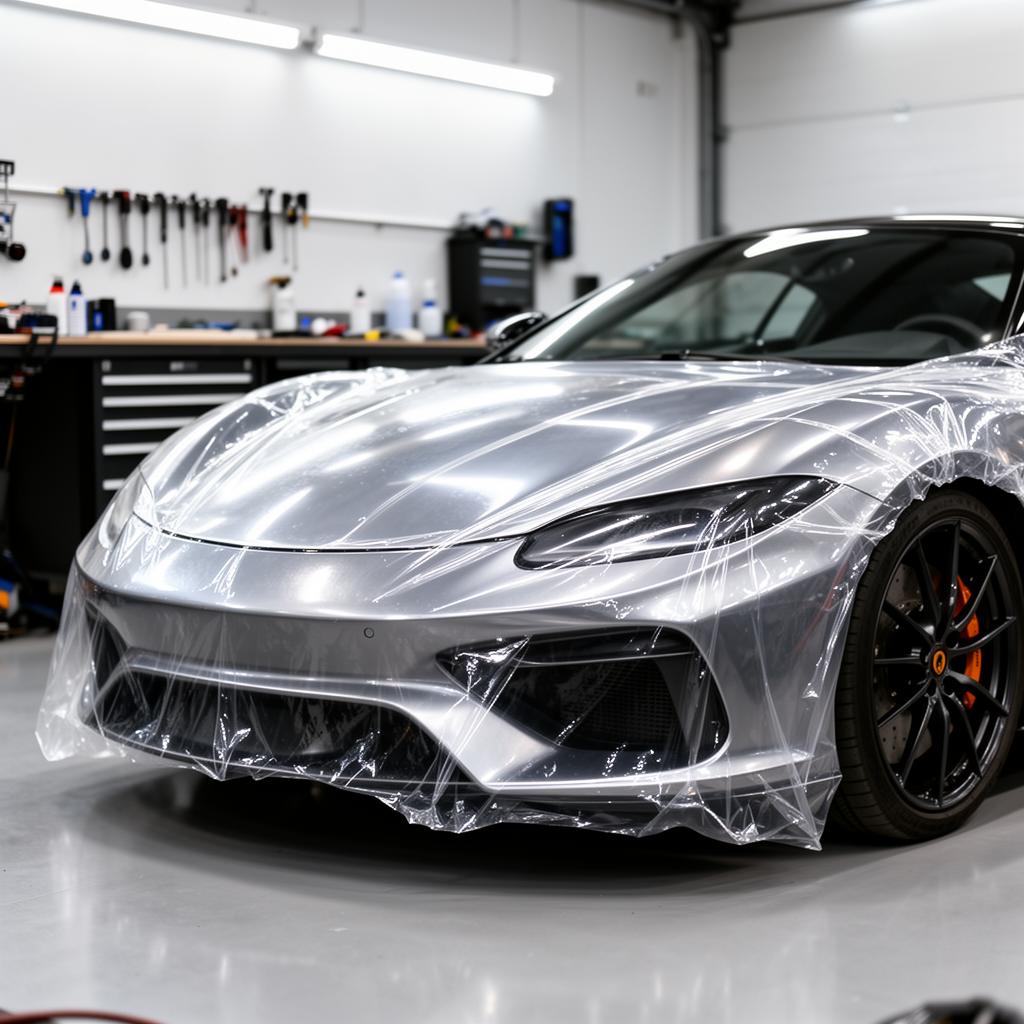
If a car detailing shop is professional and trustworthy, they will only recommend and use TPU material PPF for their customers.
●Material Characteristics
TPU is a high-grade, eco-friendly polymer material, possessing unparalleled toughness, tensile strength, and excellent flexibility.
●Superior Protection
Extremely high puncture resistance, easily deflecting stone chip impacts.
●Perfect Self-Healing
The nano anti-fouling coating on the surface of TPU possesses long-lasting thermal self-healing capabilities, instantly eliminating minor scratches.
●Exceptional Anti-Yellowing
Top-grade Aliphatic TPU offers significant UV resistance, maintaining crystal clarity for 5-10 years without cracking.
●Residue-Free Removal
Paired with high-quality pressure-sensitive adhesive, it leaves no residue even after years of removal, perfectly protecting the underlying paint.
4. How to Protect Yourself: 3 Ways to Distinguish TPU from TPH / PVC by Sight and Touch
When you visit a car detailing shop for consultation, you can ask for a sample piece of PPF to perform the following tests:
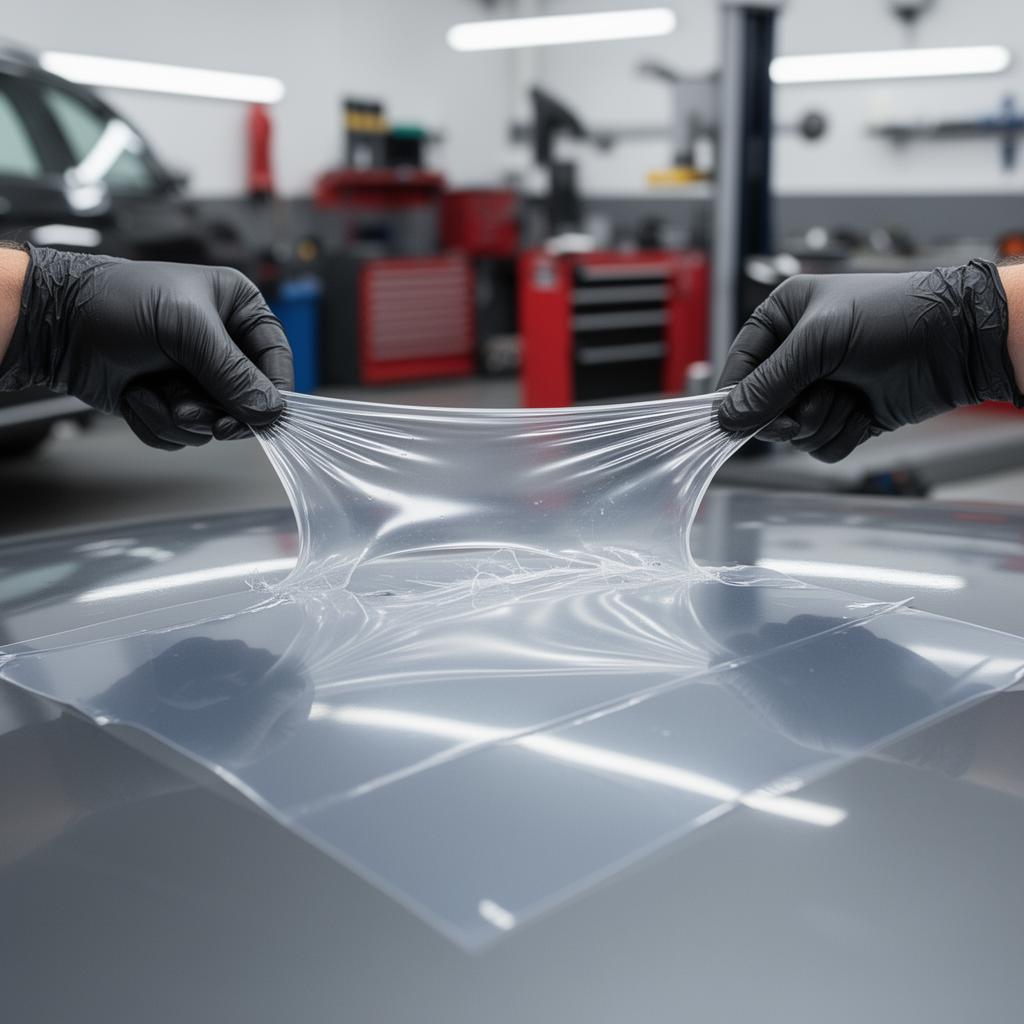
●Stretch Test (Highly Effective)
TPU: When stretched forcefully, it exhibits strong elasticity, similar to a rubber band, and is very difficult to break. TPH / PVC: It breaks easily with slight force, or after stretching, it cannot return to its original shape and becomes loose.
●Burn Test (Perform under safe conditions)
TPU: When burned with a lighter, it burns relatively slowly, producing white or light-colored smoke, with a faint alcoholic or odorless smell. TPH / PVC: It ignites immediately, emitting a large amount of black smoke accompanied by an extremely pungent, acrid chemical plastic odor.
●Fingernail Test (Self-healing Test)
Firmly scratch the film surface several times with a fingernail. High-quality TPU will completely heal the scratches within seconds when rinsed with warm water or gently blown with a heat gun. Inferior TPH usually cannot fully repair and will leave indentations.
Conclusion: Insist on TPU, Avoid Inferior Film Traps!
Applying PPF to your beloved car is for peace of mind, and you absolutely cannot be penny-wise and pound-foolish. The saying "you get what you pay for" is an absolute truth in the car detailing industry. Insist on top-grade TPU material, understand the warranty terms and origin, and your car will truly receive the best protection!
Related reading: PPF services overview · PPF maintenance SOP
PPF Material Properties Comparison Table
| Comparison Factor | TPU | TPH | PVC |
|---|---|---|---|
| Flexibility & Elasticity | Higher | Temporary | Lower |
| Self-Healing Capability | Yes | Temporary | No |
| Anti-Yellowing & UV Resistance | Higher | Lower | Lower |
| Protective Strength | Higher | Lower | Lower |
| Risk of Residue after Removal | No | Yes | Yes |
Aliphatic vs aromatic TPU: what to ask a Hong Kong shop
●Ask for the film name
The quote should name the brand and series, not just "TPU".
●Ask about yellowing
Aliphatic TPU resists yellowing better than aromatic TPU, which matters under strong sun. Check what the written warranty covers.
●Related guides
TPU vs TPH: /en/wrap/tpu-vs-tph-ppf. Material guide: /en/wrap/ppf-material-guide. PPF yellowing: /en/blog/hub/ppf-care.
Authoritative sources: XPEL official PPF product page · HK Transport Department vehicle condition guidance
Ready for a professional PPF install?
Book LETS GET WRAP today
Our GSWF Tier-1 certified team will spec the right protection package for your car.
Get in touch


![[Debunking the Cheap Trap] Why Do Cheap Taobao / Inferior PPF Films 'Destroy' Your Car's Original Paint?](https://wsrv.nl/?url=www.letsgetwrap.com%2F__l5e%2Fassets-v1%2Fdf8d71e5-fc74-47ad-bd59-32dcbed448f9%2Fcheap-ppf-cover-v3-en.webp&w=800&output=webp&q=78)
![[Paint Restoration Special] Deep Restoration of Ultimate Car Paint Shine: What to Pay Attention to During Polishing? Why Do We Insist on Using German Koch-Chemie P6.02?](https://wsrv.nl/?url=www.letsgetwrap.com%2F__l5e%2Fassets-v1%2F6397e4f2-331a-4749-9475-9c623b2fb998%2Fblog-koch-chemie-p602-polishing-cover-v2-en.webp&w=800&output=webp&q=78)


