Car Owner Guide
What to do if your car is crashed/scratched? A complete guide to PPF insurance claims and car insurance claims
Part of the PPF BY CAR topic hub

New to car film? car wrapping Hong Kong — The full guide covers film types, pricing, choosing a studio and local regulations.
Driving on Hong Kong's busy roads, with its high population and numerous vehicles, accidents are often unavoidable, no matter how skilled you are or how well you practice defensive driving. When you unfortunately encounter a traffic accident, or your car gets dented by another vehicle in a car park, besides feeling heartbroken about your car, the owner's biggest worry is often: "Oh no! I just spent tens of thousands of dollars on full-body PPF (Paint Protection Film), and now it's damaged in a crash. Will my car insurance cover it? Will the other party's insurance pay for a new film?"
Since PPF is expensive, the claims process is very different from regular factory paint repairs. If handled improperly or without sufficient preparation, car owners might end up paying thousands or even tens of thousands of dollars out of pocket for re-filming. Today, we have prepared the most comprehensive guide to PPF car insurance claims and settlements, teaching you how to protect your best interests after an accident!
1. First step after an accident: Secure the scene and collect absolute evidence
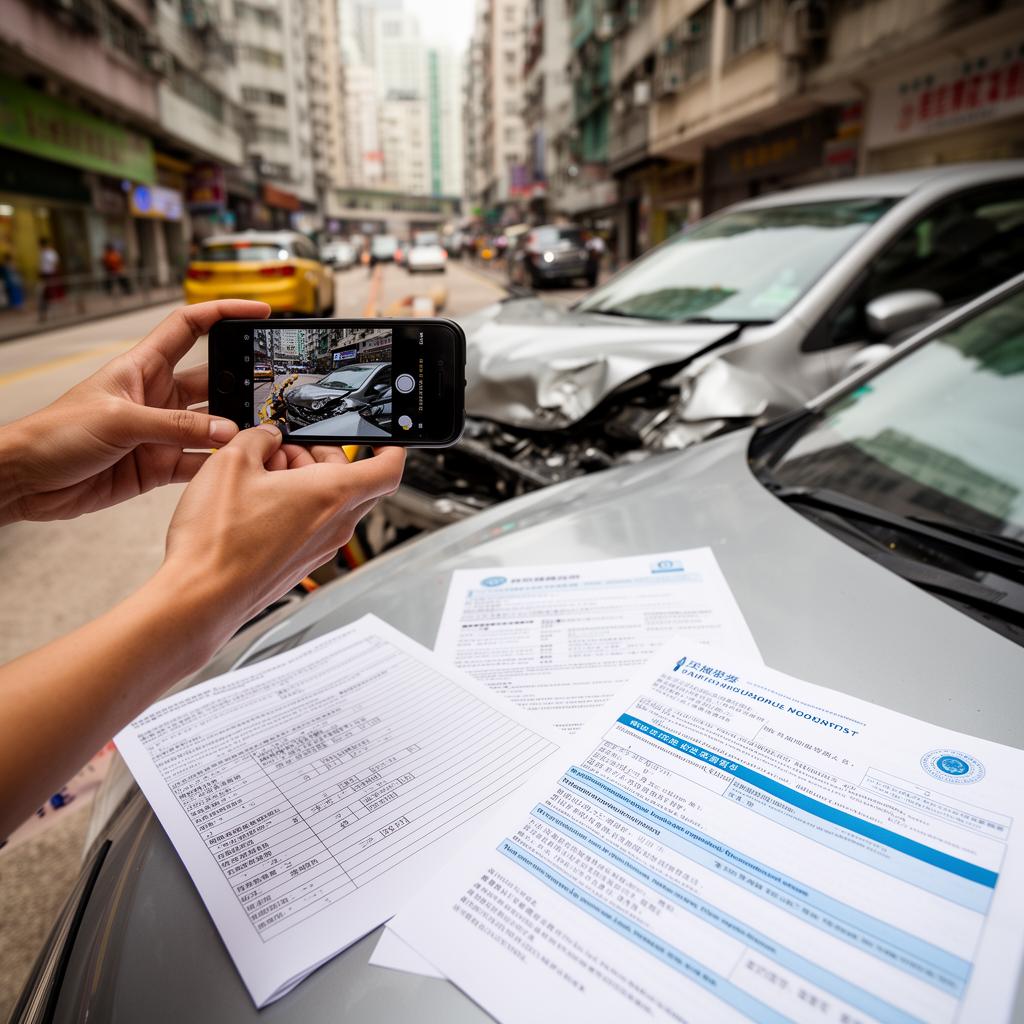
If your beloved car is unfortunately involved in a collision, resulting in damage to the PPF-covered body parts, please remain calm and follow these standard procedures:
●Take photos and videos in a safe environment
Before moving the vehicles, immediately use your phone to capture the accident scene from multiple angles. Document the damage to both vehicles, any skid marks on the ground, and license plate numbers. Pay special attention to the damaged PPF areas, taking several clear close-up photos to show if the protective film is torn, scratched, or if the underlying car body is dented.
●Report to the police and obtain a police report
Even for minor collisions, if an insurance claim is anticipated, it is strongly recommended to report to the police. The report issued by the police after their investigation (police report/accident report) is the most powerful legal document to prove how the accident occurred and who was at fault.
●Exchange driver information
You must exchange identification, driver's license, contact number, and most importantly, the car insurance company name and policy number (Cover Note) with the other driver.
2. The cruel insurance rules: Does car insurance cover PPF?
To successfully claim insurance for your PPF, you first need to clarify what type of insurance you have and how the insurance company defines "car protection film":
PPF is considered an "Aftermarket Modification": In the terms and conditions of most car insurance companies in Hong Kong, PPF is not considered "original factory standard equipment" when the car leaves the factory. It is regarded as an expensive accessory added by the car owner.
●Scenario A: Claiming under your own 'Comprehensive Car Insurance'
If you have comprehensive insurance and accidentally damaged your car, you might want to claim under your policy. The key is whether you declared the PPF to your insurance company immediately after installation! If you did not notify your insurance company to include the PPF as an insured item in your policy after installation (usually requiring a small additional premium), the insurance company will only compensate you for 'restoring the original factory paint' (i.e., painting and bodywork) when an accident occurs, and absolutely will not cover the cost of re-applying the film. Therefore, remember to notify your insurance company in writing immediately after installing PPF!
●Scenario B: Other party is at fault, claiming under their 'Third-Party Liability Insurance'
If the other party is 100% responsible for the accident, you can claim against their insurance company. The core principle of third-party liability insurance is to 'restore the victim's property to its state before the accident (Restitutio in Integrum)'. Since your car had PPF before the accident, legally, the other party's insurance company is responsible for compensating you for the cost of re-applying the PPF. However, insurance company claims departments often make it difficult, so you must provide extremely thorough documentation.
3. Key weapons for successful claims: Retain all official documents and receipts
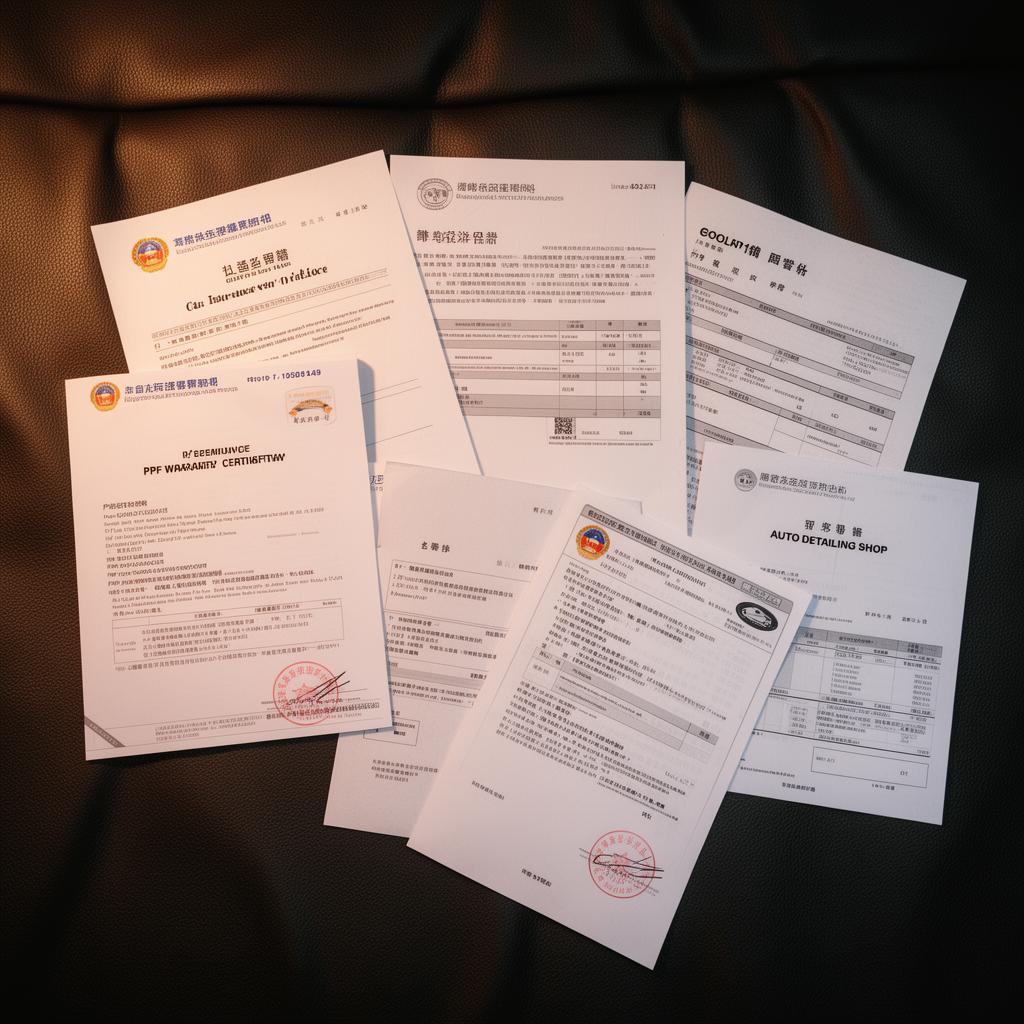
The other party's insurance company will absolutely not approve tens of thousands of dollars in compensation just because you say "I have top-tier protective film". To convince the insurance company, you must be well-prepared in advance and keep the following "four powerful tools":
| Document / Evidence | Key Requirements | Purpose for Claim |
|---|---|---|
| Official Invoice | Formal receipt with company stamp, license plate, PPF brand, application areas, and exact amount | Proves legitimate payment and details to avoid claim rejection |
| Electronic Warranty (E-Warranty) | Official electronic record from reputable brand stating installation date | Proves film authenticity and exact installation date |
| Before and After Photos | Completion photos taken by detailing shop upon installation | Proves car was in perfect film-applied condition before accident |
| Re-application Quotation | Formal repair quotation issued by detailing shop for damaged areas | Provides official repair cost estimate to insurance company |
●Legally binding Official Invoice
After the work is completed at the car detailing center, you must obtain a formal receipt with the company's stamp, clearly listing the vehicle's license plate number, PPF brand name, areas of application (e.g., full car wrap), and the exact amount. Never opt for a 'handwritten receipt' or one without a company stamp to save money, as the insurance company is highly likely to reject it.
●Original Electronic Warranty (E-Warranty)
Currently, reputable PPF brands (such as GSWF, Stek, SunTek, etc.) provide official electronic warranty records. This certificate proves that the film on your car is genuine and clearly records the installation date, serving as highly convincing proof.
●Before and after installation photos
It's best to keep the completion photos taken by the car detailing shop at the time, proving that the car was indeed in perfect film-applied condition before the accident.
●Request a 'Re-application Quotation' from the car detailing shop
After an accident, first take your car to a trusted workshop for bodywork and paint repair. At the same time, contact the car detailing shop that applied your film and ask them to issue a formal repair quotation for the damaged areas that need re-application (e.g., replacing the PPF on one car door), and submit it to the insurance company along with other documents.
4. Minor scratches vs. severe impact: What's the difference in subsequent handling?
One of the major selling points of PPF is paint protection. Different levels of accidents require vastly different subsequent handling methods:
●Minor scrapes (e.g., light contact from an adjacent car door opening, hit by a trolley)
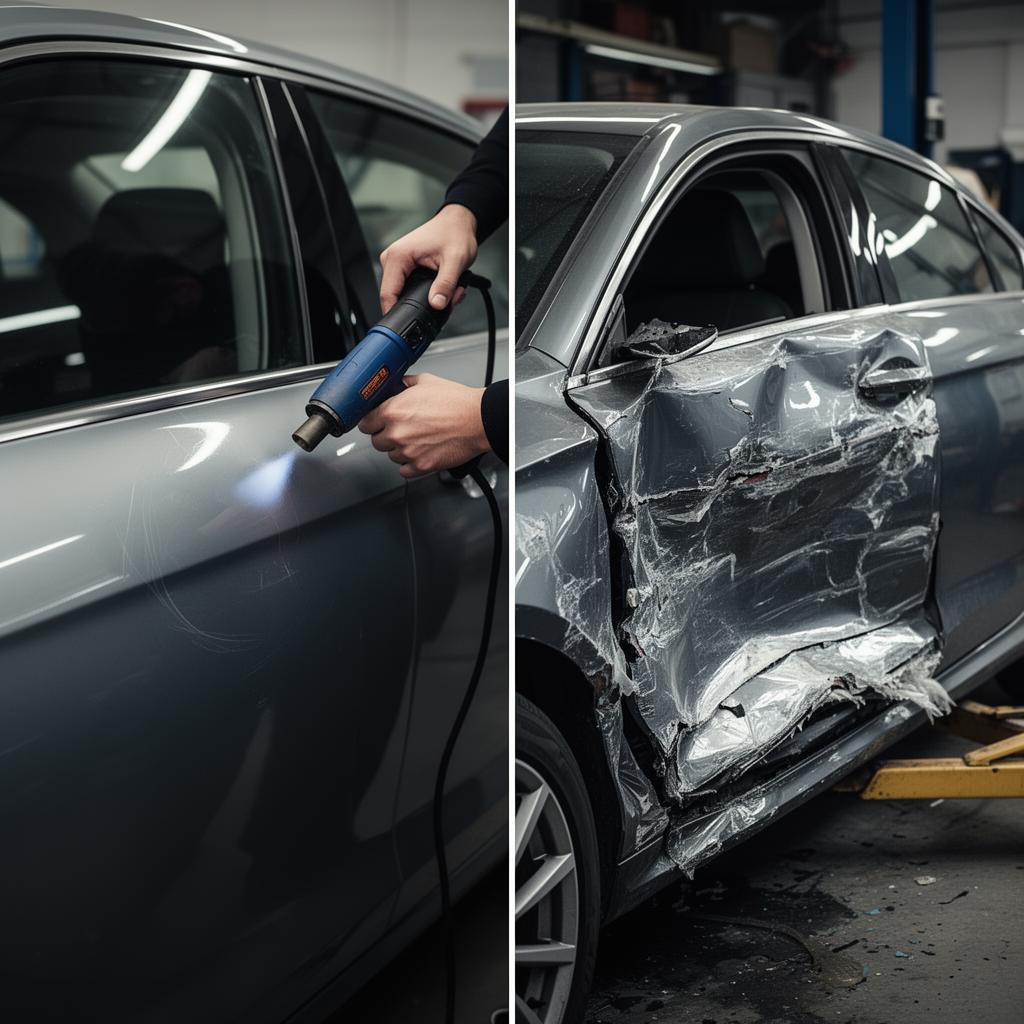
This is where the power of PPF truly shines! Usually, these types of collisions only leave scratches on the surface of the protective film, or a small amount of paint from the other vehicle. You simply need to take your car to a professional car detailing shop. A technician will use a special cleaner to wipe off the surface paint, then apply heat with a heat gun. If the scratch has not penetrated the TPU layer, the self-healing function will make the scratch disappear instantly; even if the scratch is deeper, simply peel off that small section of protective film, and you will find that the underlying original factory paint is still completely undamaged! In this case, you only need to pay for re-applying a small section of film yourself, completely avoiding an insurance claim and saving your NCD (No Claims Discount).
●Severe Impact (Panel Dent, PPF Tear)
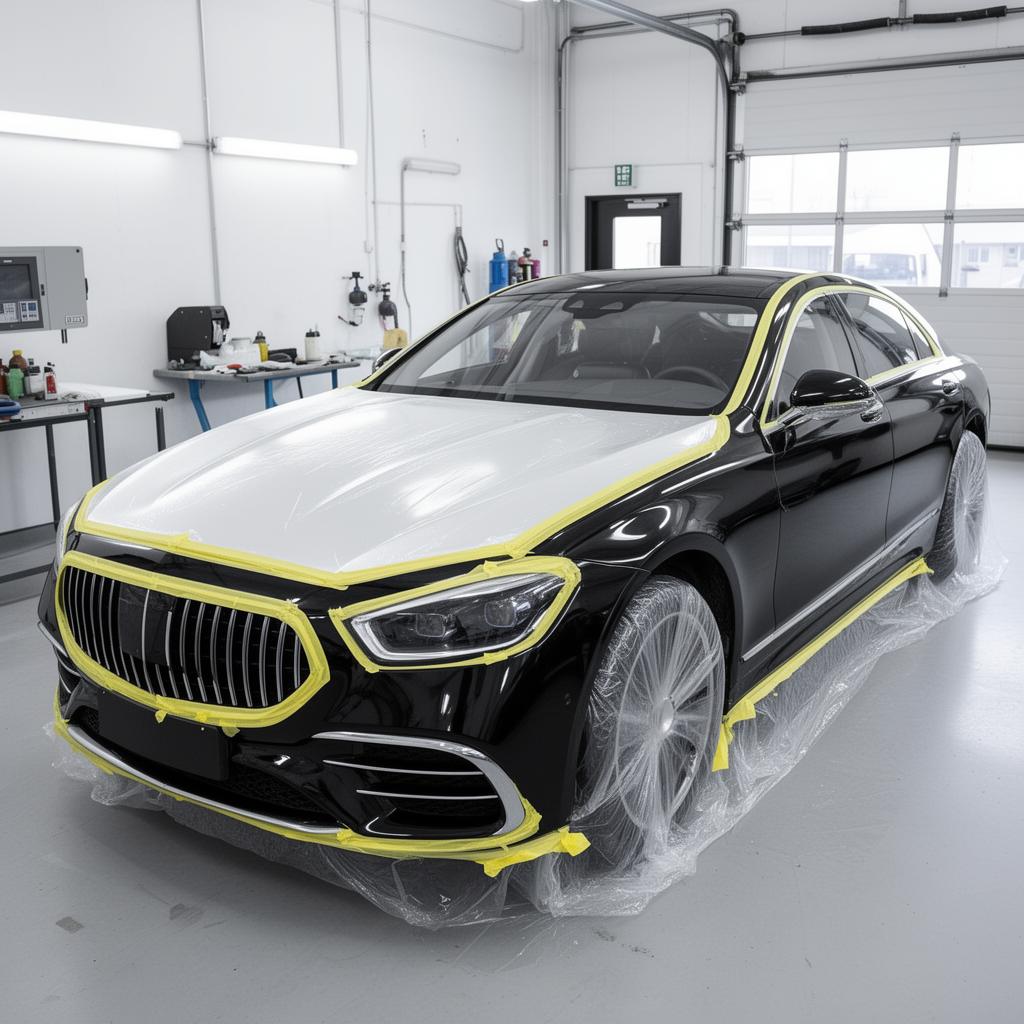
If the impact is severe enough to dent the car door or even break the bumper, the PPF, despite absorbing some of the impact, will inevitably be torn. In such cases, you must first take your vehicle to a repair workshop. The workshop will remove the damaged PPF, perform traditional panel beating, and then repaint the affected area. A crucial note: Do NOT reapply PPF immediately after repainting! Newly painted car surfaces require time for the thinner and solvents to fully evaporate. Professional advice is to wait at least 3 to 4 weeks after repainting to ensure the paint is fully cured before returning the car to an automotive detailing shop for PPF reapplication. If you rush to reapply the film, there's a high probability that when the film is removed in the future, it will peel off the newly painted car surface entirely!
5. Conclusion: Be prepared for the unexpected, drive with peace of mind
Applying PPF to your beloved car is inherently about buying peace of mind and protection. However, to extend this protection to accident claims, car owners must have good document management habits and a clear understanding of insurance declaration.
Remember the twelve-character mantra: "Declare proactively beforehand, keep receipts afterwards." As long as you choose a reputable car detailing shop for installation, keep all official invoices and warranty certificates, and clearly understand your car insurance policy terms, even if you unfortunately encounter a traffic accident, you can confidently claim the compensation you deserve from the insurance company, minimizing your losses and getting your beloved car back to its perfect state as soon as possible!
Related reading: PPF services overview · PPF maintenance SOP
Authoritative sources: XPEL official PPF product page · HK Transport Department vehicle condition guidance
Ready for a professional PPF install?
Book LETS GET WRAP today
Our GSWF Tier-1 certified team will spec the right protection package for your car.
Get in touch


