PPF Care & Maintenance
Myth Debunked: Does PPF Turn Yellow? Unpacking the Causes of Paint Protection Film Yellowing and the Ultimate Maintenance Guide to Extend its Lifespan
Part of the PPF BY CAR topic hub

Coating adds gloss, but only film physically blocks stone chips. car wrapping Hong Kong — The guide contrasts coating vs film on scratch resistance, lifespan and cost.
If you ever bring up PPF (Paint Protection Film) in car forums or owner groups, someone is bound to jump in and say: 'Don't get it! In a couple of years, the film will turn yellow, making your car look old and worn out, even worse than before!' This is undoubtedly one of the most frequently discussed topics in the car detailing industry, and the biggest myth that deters potential buyers.
So, does PPF always turn yellow? Why do some car owners have crystal-clear film after five years, while others see yellowing like mildew in just six months? Today, we'll take the most scientific and objective approach to deeply analyze the chemical causes behind PPF 'yellowing.' At the same time, we'll openly share a series of professional car care secrets, teaching you how to maximize your paint protection film's lifespan and keep your beloved car looking perfectly shiny for longer!
1. The Harsh Truth: No PPF in the World is 100% 'Guaranteed Not to Yellow'
First, we need to set a very realistic expectation: no matter how much you spend at a top-tier car detailing center, or which international super brand of PPF you choose, any plastic polymer material, when exposed to natural environmental conditions over a long period, will inevitably experience some degree of yellowing.
If a shop confidently promises you that 'our film will absolutely not yellow for ten years,' this is 100% an exaggerated marketing claim. A truly responsible and professional technician will tell you that high-quality PPF doesn't 'not yellow,' but rather significantly slows down the rate of yellowing, to the point where, within the film's reasonable five to ten-year lifespan, the yellowing is so minor it's almost imperceptible to the naked eye.

2. Deep Dive: Three Fatal Culprits Causing Premature PPF Yellowing
To prevent it, you must first understand the causes. There are three main culprits that cause an originally clear and bright paint protection film to yellow prematurely:
●Culprit 1: The Ubiquitous Attack of UV Rays
Ultraviolet rays from sunlight are the ultimate destroyer of all polymer materials. When PPF is exposed to strong sunlight for extended periods, the high energy of UV rays gradually breaks down the chemical molecular chains within the polyurethane (TPU) material, triggering photo-oxidation. This reaction causes the transparent chemical structure to mutate, visually appearing as yellowing, or even cloudiness. Owners of white cars will particularly notice this, as a white base coat magnifies any subtle yellowing.
●Culprit 2: Environmental Pollutants and Chemical Erosion from Acid Rain
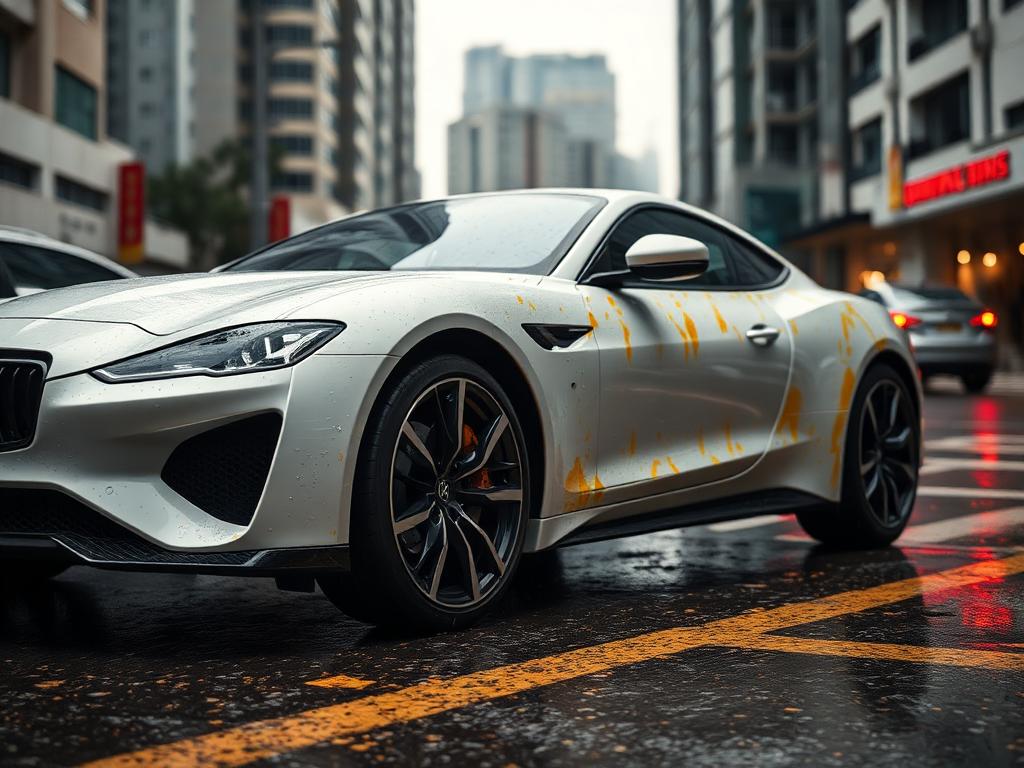
Hong Kong's road environment is full of various pollutants, including oily fumes from vehicle exhaust, industrial dust, and asphalt splatter from road surfaces. When these contaminants adhere to the PPF surface, if the owner neglects diligent car washing and maintenance, the dirt will slowly penetrate the anti-fouling top coat of the protective film. Coupled with Hong Kong's frequent slightly acidic rainfall, the combination of acidic substances and pollutants accelerates the chemical deterioration of the film surface, forming an unremovable 'yellow stain layer'.
●Culprit 3: The Fatal Flaw of Inferior Adhesives and Low-Grade Materials
This is the most heartbreaking reason for disappointment. If you opted for a cheap, inferior film made of PVC or TPH material, their inherent UV resistance is extremely low, leading to severe yellowing due to heat within a few months. Furthermore, the pressure-sensitive adhesive on the back of low-quality PPF has extremely poor chemical stability; the adhesive itself will discolour when heated. This type of yellowing, from the inside out, is completely irreversible.

3. Material Determines Destiny: The Vast Difference Between Aromatic vs. Aliphatic TPU
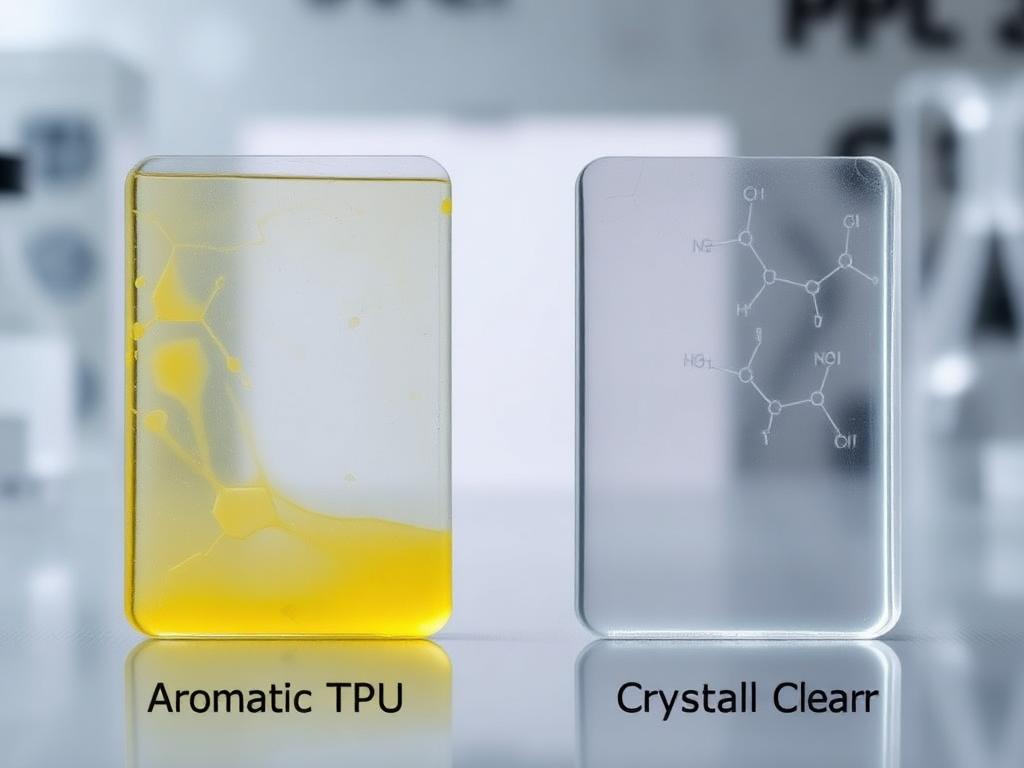
To resist yellowing, choosing the correct PPF material is the most crucial step. Professional automotive protection films on the market today primarily use TPU material, but TPU can be further divided into two main categories:
| Indicator | Data / Specification |
|---|---|
| Aromatic TPU yellowing timeline | 1 to 2 years |
| Aliphatic TPU yellowing delay | 5 to 10+ years |
| Recommended car wash frequency | Every 1 to 2 weeks |
| Reasonable PPF lifespan | 5 to 10 years |
| Feature | Aromatic TPU | Aliphatic TPU |
|---|---|---|
| Common Usage | Early or inexpensive PPF | Top international PPF brands |
| Benzene Rings | Contains benzene rings | Completely free of benzene rings |
| Yellowing Timeline | Severe yellowing after 1 to 2 years | Delays yellowing for 5 to 10+ years |
| UV Resistance | Prone to photodegradation | Strong immunity to UV rays |
●Aromatic TPU: The Achilles' Heel of Cheap Films
Early or inexpensive PPF mostly uses aromatic TPU. Its molecular structure contains 'benzene rings', which are extremely prone to chemical reactions and produce yellow substances when exposed to UV radiation. Typically, after one to two years of use, yellowing becomes very severe, significantly compromising the appearance.
●Aliphatic TPU: The Ultimate King of Anti-Yellowing
Currently, all top international PPF brands exclusively use aliphatic TPU. Its molecular structure is extremely stable and completely free of benzene rings, which are susceptible to photodegradation. Although costly, aliphatic TPU possesses strong immunity to UV rays, significantly delaying yellowing for five, or even ten years or more, making it a truly 'super anti-yellowing' material.
4. The Ultimate Maintenance Guide to Extend PPF Lifespan: 30% Installation, 70% Maintenance
Even if you've installed the highest-grade Aliphatic TPU paint protection film, neglecting daily care will still accelerate coating degradation. Here are the maintenance guidelines recommended by car detailing experts:
●Step 1 – Wash with pH-Neutral Shampoo
Wash car every 1–2 weeks using pH-neutral shampoo.
●Step 2 – Choose Covered Parking
Park in covered spaces or use a UV-resistant cover.
●Step 3 – Apply PPF Maintenance Spray
Apply PPF maintenance sealant after drying.
●Step 4 – Add Ceramic Protection
Apply PPF-specific soft ceramic coating.
●Rule 1: Establish a Regular Neutral Car Washing Routine
Never assume that applying PPF means you don't need to wash your car! Regular car washing is the only way to remove corrosive surface contaminants (such as bird droppings, tree sap, and oil film). It is recommended to wash your car every one to two weeks, and you must use a pH-neutral car wash solution. Cheap car wash products with strong acids or alkalis will instantly damage the anti-fouling top coat of the PPF, causing the film to lose its shine and accelerate yellowing.
●Rule 2: Choose Parking Locations Carefully, Avoid Prolonged Sun Exposure
UV rays are always the biggest enemy. If conditions permit, try to park your car in an indoor car park or a covered space. If street parking is unavoidable, consider covering your car with a high-quality car cover with UV protection to block long-term direct sunlight from the source.
●Rule 3: Provide Dedicated 'Moisturisation' and Coating Maintenance for PPF
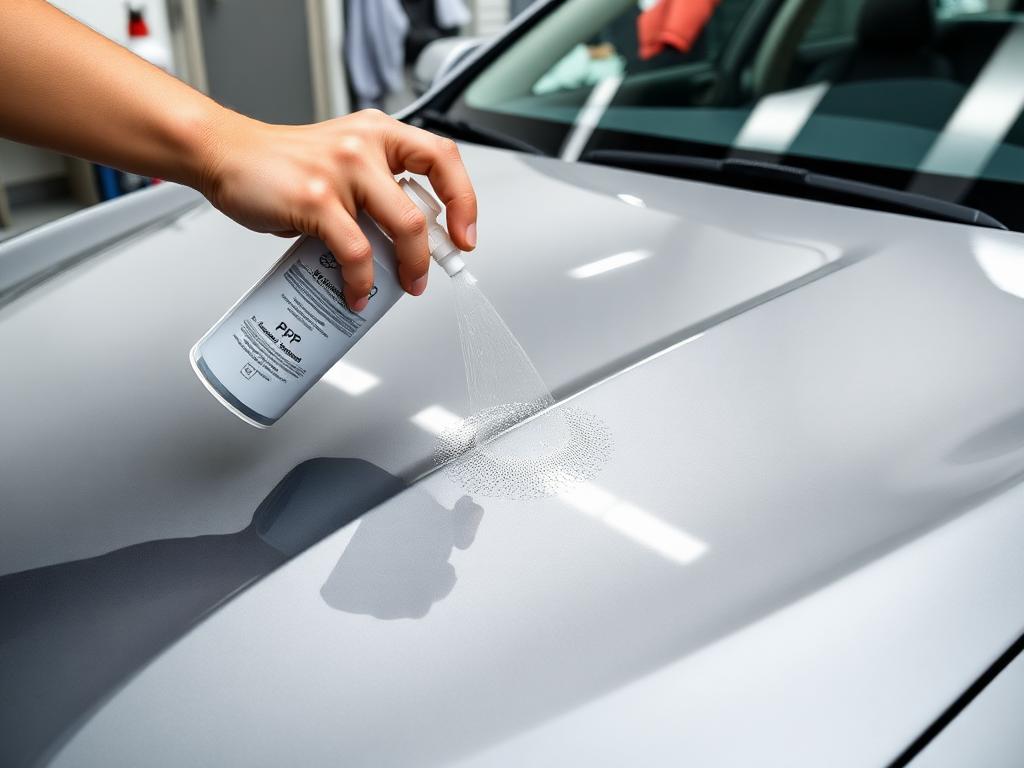
The self-healing top coat on the PPF surface requires maintenance. It is recommended to use a maintenance spray specifically developed for PPF (PPF Sealant / Detailer) after each car wash and drying. These maintenance products can replenish minor coating loss, increase hydrophobicity (water-repellent effect), and form an additional barrier layer to prevent dirt from embedding into the film surface.
●Rule 4: Advanced Protection – PPF-Specific Ceramic Coating
If you seek the ultimate protection, you can apply a layer of 'PPF-specific soft ceramic coating' on top of the protective film. This additional crystalline layer can significantly enhance the film's anti-fouling and UV resistance capabilities, truly minimising the probability of yellowing.
5. Conclusion: Facing the Life Cycle of PPF with the Right Mindset
In summary, the fact that PPF 'will yellow' is indeed a physical law, but it should absolutely not be a reason to refuse to protect your beloved car. As long as you choose internationally recognized top-grade Aliphatic TPU material, combined with a high-quality car detailing installation center, and diligently perform correct washing and maintenance in your daily driving, your beloved car can maintain its crystal-clear, dazzling shine for a very long time.
Even if, after a few years, the PPF does show slight signs of age, remember its original mission: it has protected your car from countless stone chips, acid rain erosion, and malicious scratches. When you peel off that slightly yellowed protective film, revealing the flawless, sparkling original paint underneath, you will deeply understand how worthwhile this investment in car care truly was!
Related reading: PPF services overview · 2026 PPF pricing guide
Authoritative sources: XPEL official PPF product page
Ready for a professional PPF install?
Book LETS GET WRAP today
Our GSWF Tier-1 certified team will spec the right protection package for your car.
Get in touch


